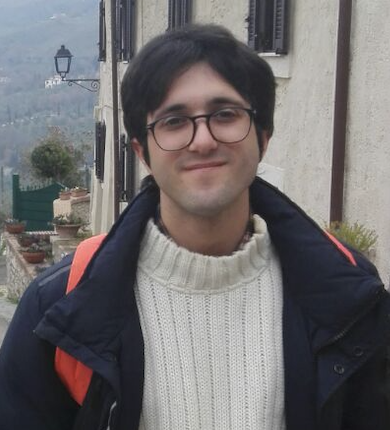
Leonardo Lavagna
I'm a mathematician specialized in Data Science and Quantum Computing
- Sapienza University
- ResearchGate
- Github
- HackerRank
- K Kaggle
- Google Scholar
- ORCID
You May Also Enjoy
Semi-Supervised Multichannel Anomaly Detection Using QAOA-Driven Selection and Set Covering
less than 1 minute read
Published:
Our contribution on semi-supervised multichannel anomaly detection using QAOA and set covering, where multivariate time-series information is encoded into a QUBO and QAOA-driven samples are used to build interpretable convex regions of normal behavior, has been published in the 2026 International Joint Conference on Neural Networks (IJCNN). The method is evaluated on synthetic data and real-world water smart-meter measurements, achieving competitive performance and the best recall and F1-score among the considered methods on the Città Ducale dataset. The paper is available here. Code is available here. Read more
From Problem-Structured QAOA to Problem-Agnostic Variational MaxCut Solvers: Representation, Redundancy, and Optimization Landscapes
less than 1 minute read
Published:
Our contribution on the relationship between QAOA layers and MaxCut structure via “agnostic” variational solvers where the problem structure is controllably removed and the corresponding solutions analyzed (in terms of cost landscapes and quality) has been published in Applied Mathematics and Statistics. The article is available here. Code available here and related blog post here. Read more
Time Series Anomaly Detection with Quantum Variational Methods and Set Covering
less than 1 minute read
Published:
Our contribution on time-series anomaly detection at ICASSP 2026 (see this previous post) has been published here. The main focus of this paper has been to imporve upon our previous work on time-series prediction using QAOA and set covering strategie. More materials are available in these blog posts here and here. Read more
Papers related to the 2026 IEEE International Symposium on Circuits and Systems
less than 1 minute read
Published:
We recently presented two contributions at the 2026 IEEE International Symposium on Circuits and Systems (ISCAS) in Shanghai. These contributions are a natural continuation of our works about time-space trade-offs in quantum cryptosystems (I’ve talked about this research topic in a couple of blog posts, se e.g. here). In this case we focused on two complementary aspects of the quantum version of the “Hellman construction” proposed last year at the same conference in London (cf., this post and this paper)
- A paper about a unified framework for cryptographic search based on quantum walks and Grover’s algorithm
- A paper about the impossibility of having multiplicative resource scaling in cryptographic search under the previous unified model.